An analysis of more than 6,000 posts shows how André Janones’ WhatsApp channel changed the pace, content and language of Lula’s official accounts in the comeback that secured his fourth term.
Lula won Brazil’s October 25 runoff after trailing in the first round, a reversal no presidential candidate had achieved since 1989. In an analysis for CEVIPOF/Sciences Po, researcher Djiovanni Jonas França Marioto, head of the Laboratory of Representation and Digital Elites (LaRED), examines “Janonismo.” This is the digital mobilization style of deputy André Janones, whose WhatsApp channel “Exército do Lula” (Lula’s Army) reached 10 million members. Drawing on the candidates’ official accounts, he shows how this mobilization changed the way Lula’s campaign communicated and whom it claimed to speak for.
The Central Question: On October 4, Lula (PT) finished second with 45.2% of valid votes, against 47.0% for Flávio Bolsonaro (PL). Three weeks later he won with 51.8%. In every runoff since 1989, the first-round leader had won. Turnout and regional shifts are part of the explanation. The article asks a different question: what can political communication research say about the left’s use of social media in this comeback?
The Analysis: The author examines the text and engagement of 6,017 posts. They come from Lula’s and Flávio’s official accounts on X, Instagram, Facebook, YouTube and TikTok, published between August 16 and October 25, 2026. He frames Janones as a “digital political elite”: a politician who combines the capital of elected office with an online reach large enough to set part of the public agenda. He reads the changes he identifies as signs of a new campaign model, not as proof that Janones won the election.
Evidence and Arguments: The army reached Lula’s official accounts late. Once it did, the accounts’ pace, content and language changed.
The Channel: “Exército do Lula” grew from 3.3 million followers on October 12 to 10 million on October 23. Janones told members to target undecided voters and people who had not voted in the first round. He asked them to use everyday language and to talk about concrete policies such as ending the “6×1” work schedule. He also told them to ignore opposing content, including a video by Nikolas Ferreira, because any reaction would widen its reach.
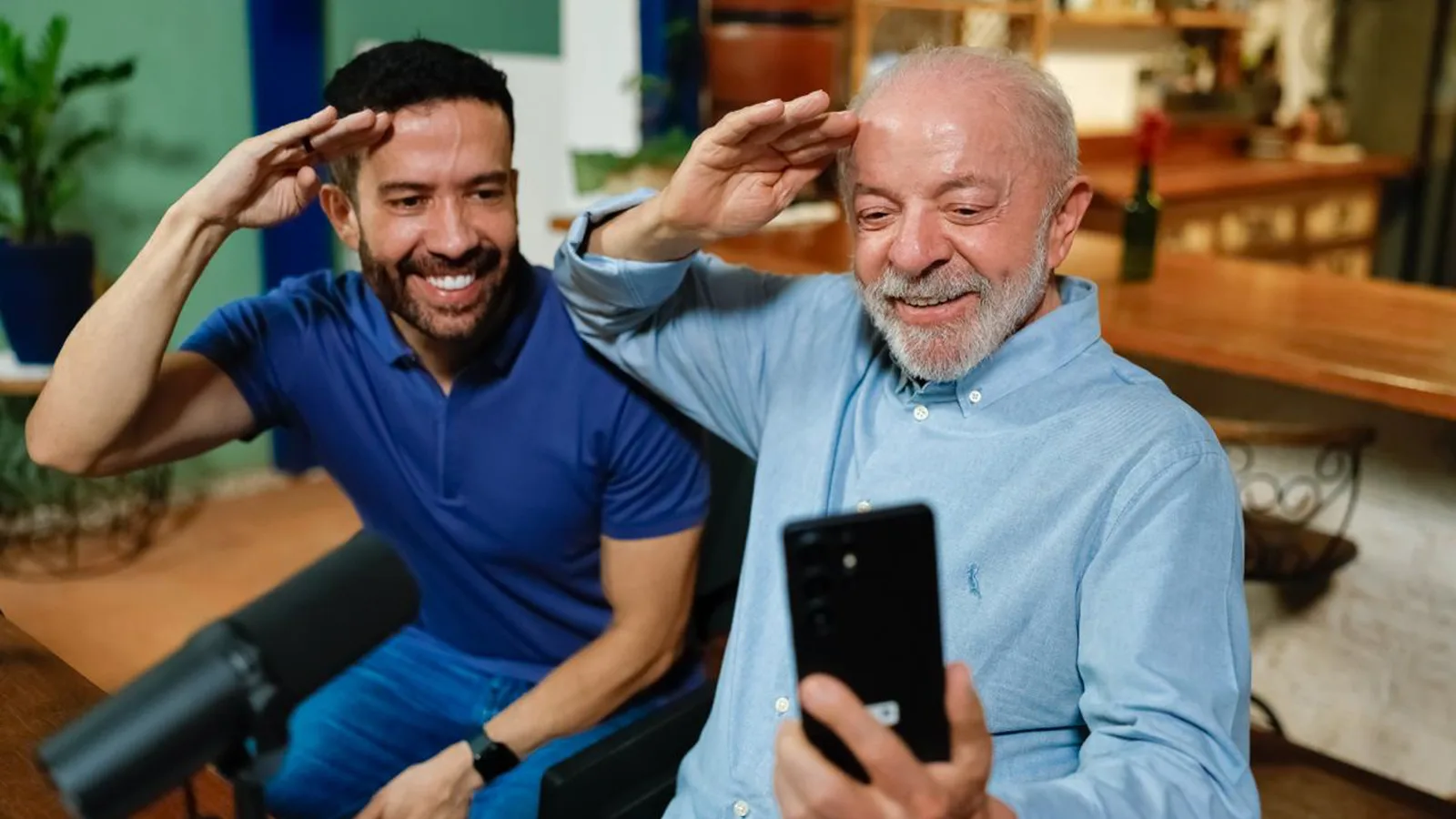
Two Strategies: The expression “Lula’s army” first appeared on Lula’s accounts on October 16. It peaked on October 22, with a joint livestream that presented Lula and Janones as “the marshal and the general.” Flávio’s “Tropa do Flávio,” with just over a million members, stayed off the main stage of his accounts. It appeared mostly as an invitation fixed to more than 200 of his YouTube videos.
Pace and Relay: In the final nine days, Lula’s accounts rose from about 28 to 80 messages a day. Retweets went from about one in ten messages to almost half. They mostly relayed the PT, the governors of Bahia and Piauí, and Mídia NINJA. Flávio’s accounts rose from 16 to 29 messages a day, and retweets fell back to about 5% of them.
Content: Messages about the government’s record fell from 11.5% to 3.1% of Lula’s output. Mentions of Flávio rose from 4.7% to 20.6%. Calls to rallies and door-to-door campaigning almost doubled, from 6% to 11%. A language of persuasion aimed at undecided voters also appeared. Janones had said attacks would not move Bolsonaro’s loyal voters, yet Lula’s accounts kept attacking Flávio, and those posts drew less engagement than his others.
Audience: Instagram shows no effect of the army. On YouTube, Lula’s channel gained about 580,000 subscribers on October 22 and 660,000 on October 23, against about 7,600 a day earlier in the runoff.
Representation: Drawing on Michael Saward’s view of representation as a claim, the author shows that “Brazilian families” nearly disappeared from Lula’s messages, falling from 3% to 0.3%. The army, with its ranks and tasks, turned the people Lula claimed to represent into the campaign’s workforce. It also brought military language into democratic competition, a vocabulary that Flávio’s “troop” shows both camps used.
Implications and Contributions: The data cover only the official accounts and do not measure votes, because the WhatsApp channel lies beyond the reach of public data. Even so, the case points to a shift comparable to Barack Obama’s 2008 campaign. Campaigns are moving from platforms where they broadcast to followers toward messaging channels, where an allied digital elite organizes supporters directly and gives them tasks. Within days, left-wing groups in France, Spain and Argentina launched channels modeled on Lula’s army. The author raises two reservations. The model’s military vocabulary brings the logic of combat into democratic competition. Its channels are also hard for researchers and electoral authorities to observe, a concern as France’s 2027 presidential election approaches. Its core idea is older than any platform: asking citizens to convince an undecided neighbor brings them back into the work of politics.
Foto: Ricardo Stuckert/Lula Oficial
Siga @redem.inct no Instagram e @redem_inct no X para saber mais sobre os estudos realizados por nossos pesquisadores!
Autor