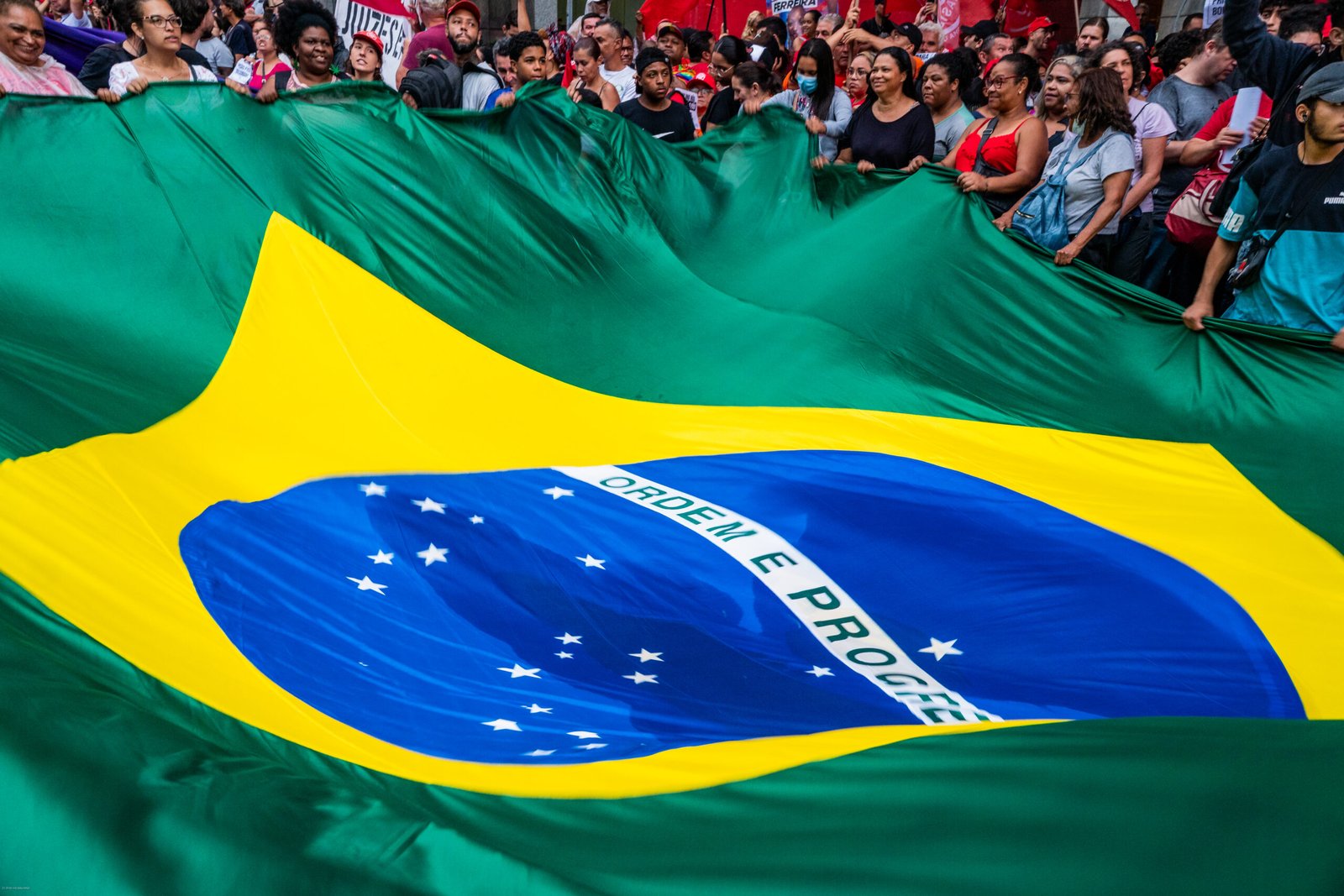
Brazil goes to the polls with both front-runners rejected by more than half of the electorate, and still no alternative has broken through. In an analysis for CEVIPOF/Sciences Po, researcher Roberta Picussa shows how the Lula–Bolsonaro divide, a banking scandal that has reached the Supreme Federal Court and pressure from the Trump administration are testing the resilience of Brazilian democracy. She also explains why widespread rejection of the two leaders has fueled polarization instead of opening space for a third option.
The Central Question: The first round of Brazil’s general election takes place on October 4, with a possible runoff on October 25. Two candidates lead the race. Lula da Silva (PT) is seeking a fourth term. Senator Flávio Bolsonaro (PL) is running in place of his father, Jair, who is barred from the race and in prison after being convicted of attempting a coup d’état. The article asks whether Brazil’s democratic institutions can withstand a campaign shaped by polarization, distrust of institutions, corruption scandals and foreign interference.
The Analysis: The author draws on poll data from the BBC aggregator and the Quaest Institute, on 2025 focus groups by INCT ReDem, and on the political fallout of the Banco Master case and U.S. pressure. She treats polarization as a matter of both supply and demand: what voters want, and what the parties are willing to offer them.
Evidence and Arguments: Both leaders face high rejection, yet the challengers together reach only about 13% of voting intentions.
- The Polarization Paradox: Lula polls between 37% and 41% and Flávio between 31% and 37%. Projections show a statistical tie in the runoff, with Flávio numerically ahead. Rejection stands at 55% for Lula and 56% for Flávio (Quaest). It has not opened space for an alternative. Instead, it has fueled tactical voting, driven by fears that one of the two could win in the first round.
- The Supply Gap: Lula, now 80, has no clear successor on the left. PSOL, PDT and Rede chose to back him rather than field their own candidates. On the right, six of the seven parties in Congress’s largest bloc stayed neutral. Only the PSD fielded an alternative, the veteran Ronaldo Caiado, who is stuck between 3% and 5%.
- The Outsiders: Renan Santos (Missão) pushes a radical anti-establishment message under the slogan “arrest, kill” and polls between 3% and 4%. Augusto Cury (Avante), a self-help author, presents himself as a “bridge” between the two camps. He jumped from 2% to 10% after a televised debate but could not hold that level. Among voters who want neither Lula nor the Bolsonaros, 22.2% prefer an outsider and 16.6% a moderate (Quaest). Doubts about outsiders’ viability and ability to govern limit their appeal.
- Scandal and Institutional Crisis: In May 2026, messages published by Intercept Brasil showed Flávio pressing banker Daniel Vorcaro for R$134 million (about US$25.8 million) to fund a film about his father. Then in September, a Federal Police report attributed alleged communications with Vorcaro to Justice Alexandre de Moraes. That plunged the Supreme Federal Court (STF) into a credibility crisis. The STF had been decisive in containing Bolsonaro’s authoritarian turn, and its weakening has re-energized his base.
- Foreign Pressure: In August 2026, the Brazilian Intelligence Agency (ABIN) warned the Superior Electoral Court (TSE) that the risk of U.S. interference had reached a critical level. This followed a 50% tariff tied to Jair Bolsonaro’s trial and lobbying by Eduardo Bolsonaro, whom the STF convicted of coercion.
Implications and Contributions: The article warns that the erosion of the STF’s credibility reaches beyond this election. If Flávio wins, a possible return to an authoritarian project would face a discredited Court that is less able to act as a check on power. The analysis also points to an establishment that depends heavily on personalistic leaders and offers voters few real alternatives. Combined with external pressure, this once again puts the resilience of Brazilian democracy to the test.
Siga @redem.inct no Instagram e @redem_inct no X para saber mais sobre os estudos realizados por nossos pesquisadores!
Autor